The logbook that writes itself
BoatDeck keeps the upkeep, the engine hours and the ship's papers of the boat you own. You don't type the numbers — it takes them from your trips.
A TestFlight is coming. Write if you want in. · Coming to the App Store · Coming to Google Play
The idea
You never type a number
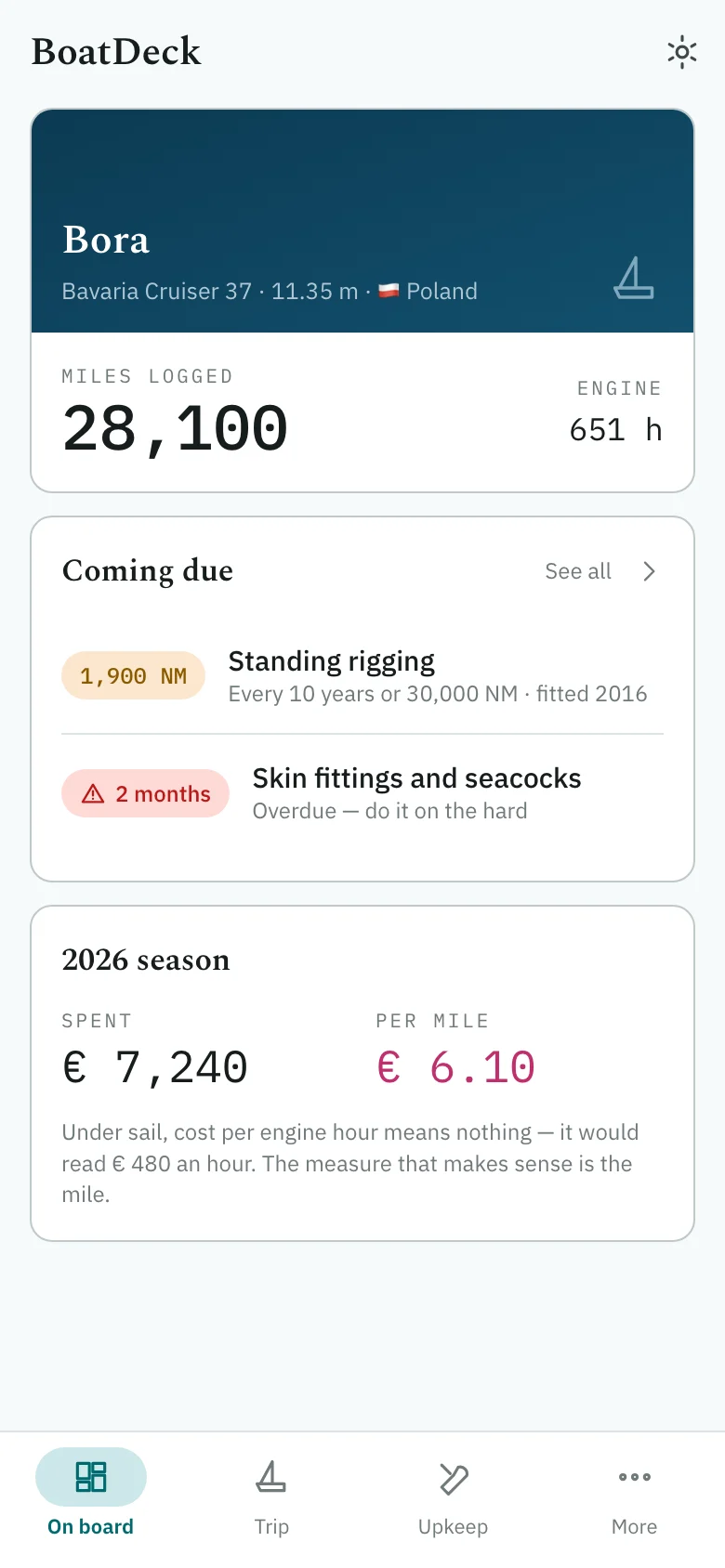
Every boat app dies the same way: it asks you to keep it fed. Three weeks in you stop, and from then on the numbers are wrong — which is worse than not having them.
Engine hours come from the engine
Not from the trip. A six-hour passage under sail is six hours of nothing on the engine, and an app that counts the whole passage will have you changing oil that has never been used. BoatDeck counts the minutes the engine actually ran.
The berth is wherever you are standing
Set it once from the pontoon and it stays. It checks there is water near you before it accepts, so nobody moors their boat in the middle of a city by mistake.
The plan arrives with the boat
Finish setup and the schedule is already there, filtered to your hull, your engine type and your drive. No blank list to fill in on a winter evening.
The fork
Sail or motor, decided at the start
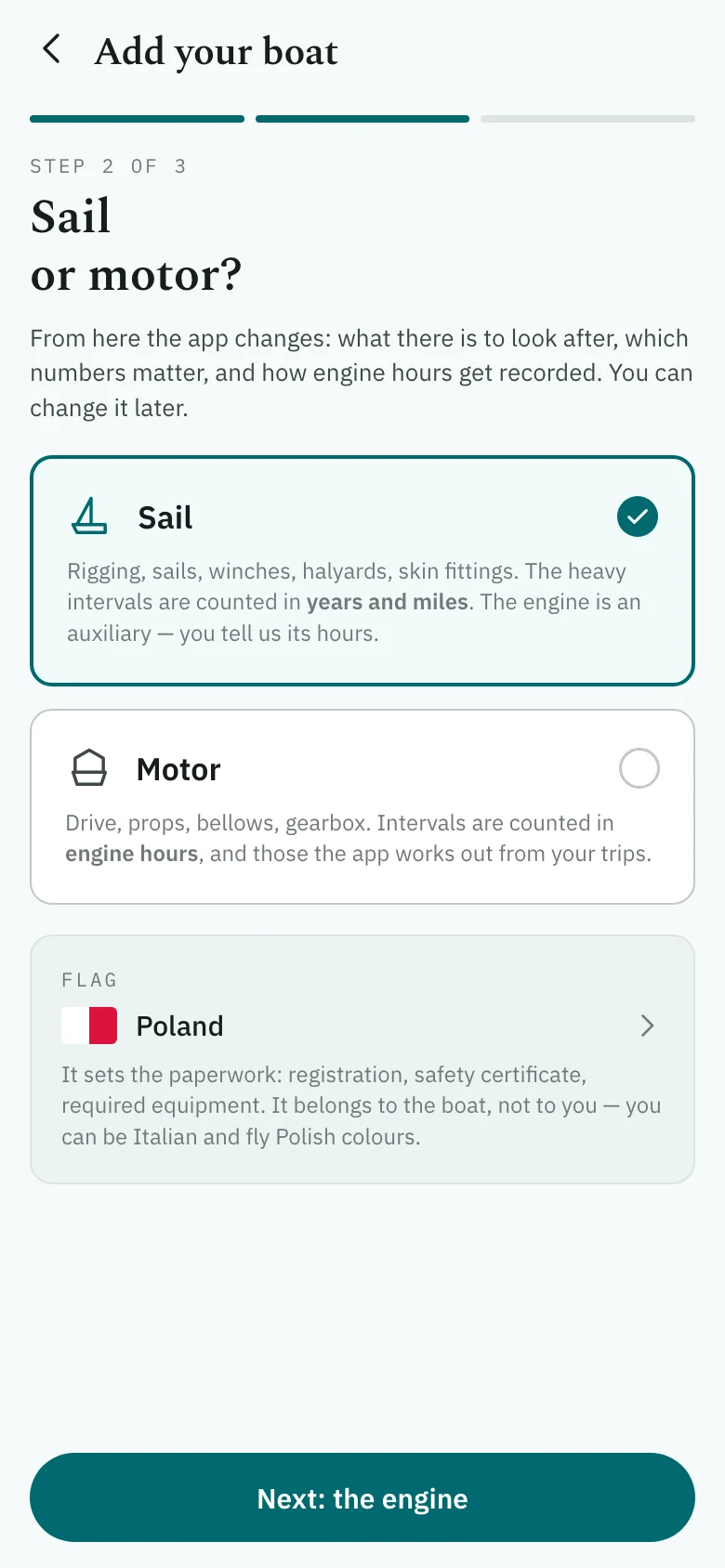
You say which one when you add the boat, and the app forks. A motorboater never sees winches, halyards or standing rigging — there is no reason to carry someone else's vocabulary around.
A sailor gets the heavy intervals in years and sea miles, because that is what wears a rig out, and the engine drops into the role it actually has on a sailboat: an auxiliary. Cost per engine hour is meaningless there. Cost per mile is not.
Intervals
Hours, months, miles — whichever comes first
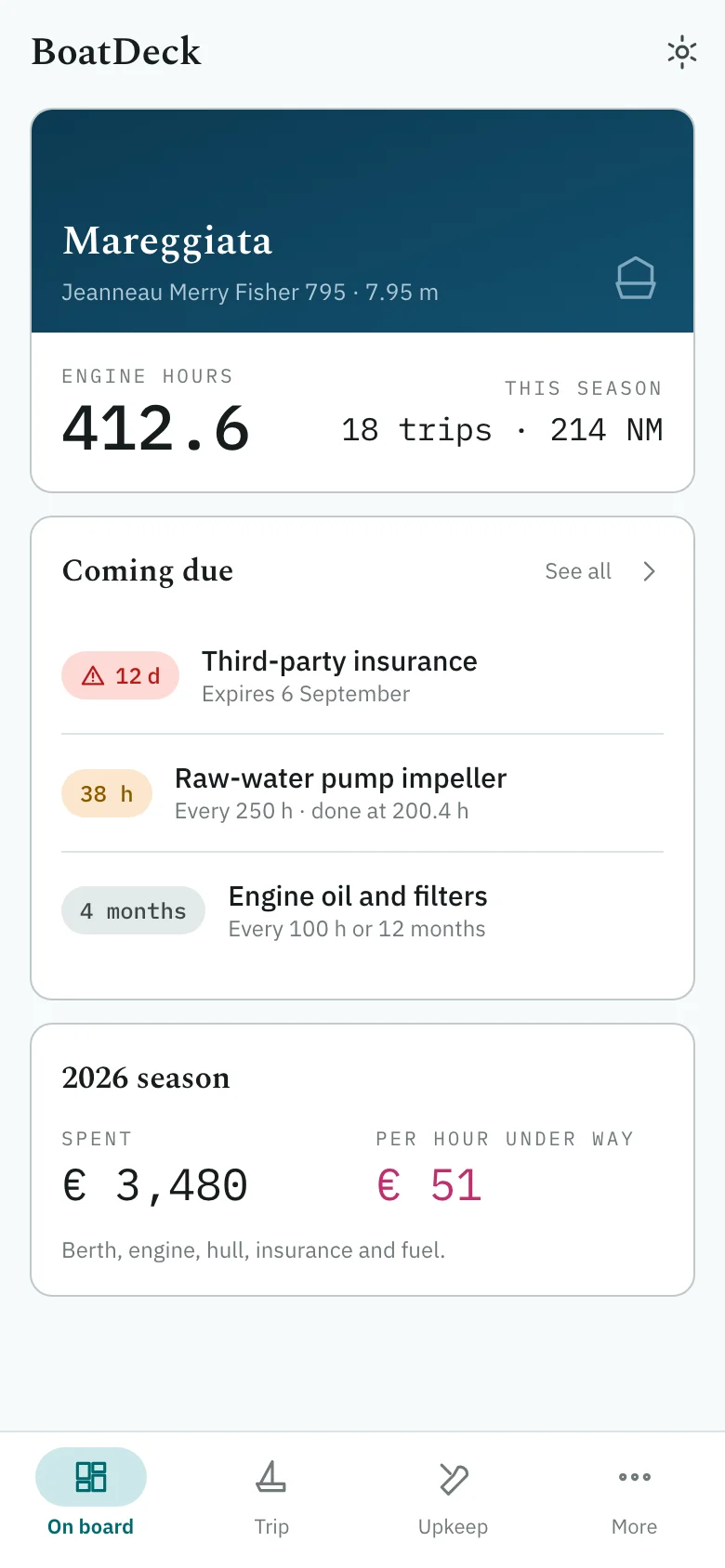
Real service books have always thought this way. Most apps count one axis and quietly get the other two wrong.
Hours
An impeller wears out turning. This is the axis that matters to a motorboat, and BoatDeck fills it in from your trips.
Months
Rubber perishes with the boat on the hard and the engine cold. Time is the axis everyone forgets, and the one that catches out boats that are barely used.
Nautical miles
Standing rigging and sails wear with sea covered, not with engine hours. Without this axis a sailboat looks brand new forever.
Paperwork
The flag decides, not your language
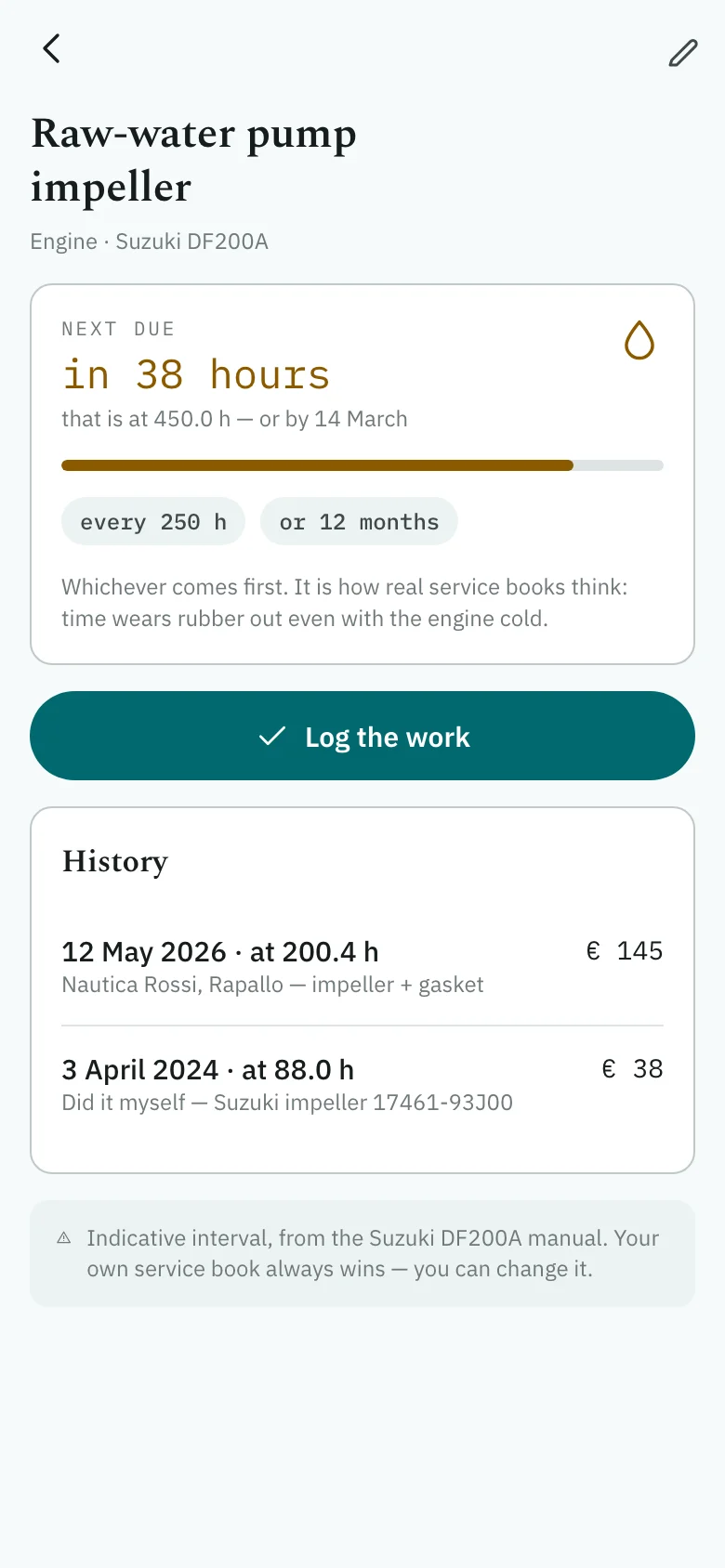
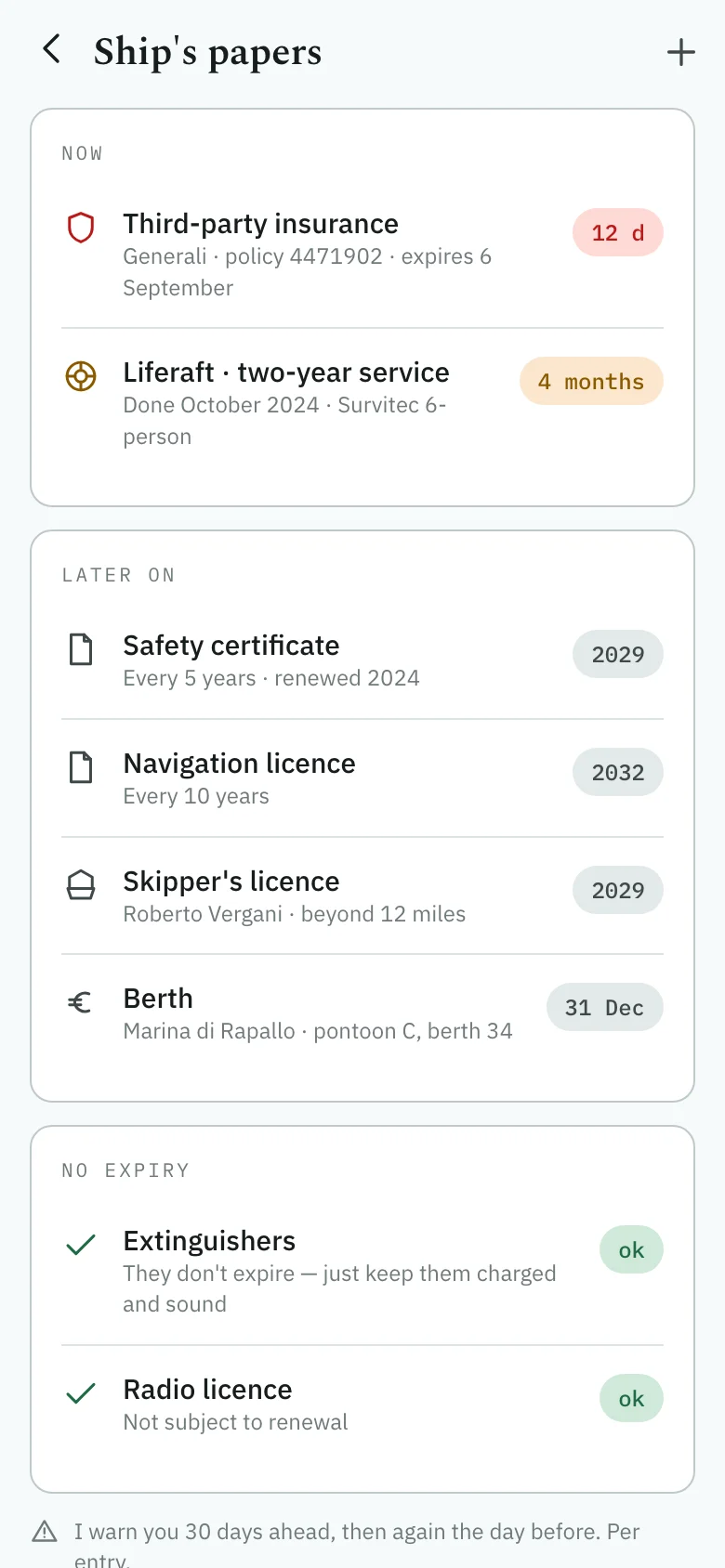
You can be Italian, read the app in Italian, measure in metres — and own a boat on the Polish register that answers to Polish rules. Those are three separate things and BoatDeck keeps them separate: the flag belongs to the boat, the language and the units belong to you.
Italy is written out in full. The other flags fall back to a neutral list while we write them, and the app says so plainly — an empty page would read as "you have nothing due", which is the one thing it must never say.
Honestly
What it is not
BoatDeck is not a chartplotter. No charts, no weather, no AIS, no routing. Those apps exist, they are good, and you already have one on your phone.
This is the other half of owning a boat — the half that happens between trips, and the half that costs money when you forget it.
Next
Being built now
Costs by season, with the number nobody works out and everyone wants: what an hour under way, or a mile sailed, actually costs once the berth is counted.
Ship's documents with their photographs, readable at the pontoon where there is no signal. And an hour meter you photograph instead of typing.
Screens from the design. Costs and documents are still being built — everything else is in the app today.